Blockchain, IoT and AI for Securing Crop Forecasts
Agriculture is undergoing one of the most significant changes it has seen in centuries. Once done mostly by hand and instinct, farming is becoming guided more and more by information and sophisticated technology. The combination of blockchain and Internet of Things (IoT) and artificial intelligence (AI) has become powerful, with the ability to transform how farmers predict their crop yields, manage the risks and ensure money. Accurate crop forecasts aren’t just critical to farmers but to global markets as well, where food supply and demand affect everything from the prices of commodities to government policy.
For investors and farmers alike, the association between good forecasting and financial planning cannot be overstated. Just as traders keep a keen eye on crypto prices today for making informed investment decisions, stakeholders in agriculture depend on crop forecasts to manage supply chains, hedge against crop shortages and plan distribution. When blockchain, IoT and AI work together, the result is a transparent, secure and predictive ecosystem to strengthen trust in the food economy.
The Role of IoT in Data Collection
Sensors planted in the ground monitor moisture, pH and nutrient concentrations, while flying drones and satellites are used to take aerial images of crop health. This is where blockchain comes in. By logging the IoT data in decentralised ledgers, all data in any measurement and observation becomes immutable. Farmers, suppliers and regulators can rely on the data being unmodified, and smart contracts can be written to initiate automatic activity such as adjusting irrigation or providing for crop insurance payouts based on verified data inputs.
That said, according to the Binance Research, “Ethereum is emerging as the institutional favourite, nearly surpassing Bitcoin in ETF inflows and cementing its role as crypto’s yield-bearing backbone”. This could be crucial because Ethereum is utilised in IoT to increase things like security, the integrity of data and automation through smart contracts and trustless environments.
AI as the Analytical Brain
While IoT devices collect raw data, AI algorithms make sense of that data. Machine learning models analyse historical and real-time information to make striking potential yield predictions. AI can be used to detect early signs of pest infestations, predict weather effects on crops, and optimise resource allocation.
What makes this synergy so powerful is the feedback loop: IoT is always feeding new data, AI builds predictions from one cycle to the next and blockchain ensures the entire process is secure, creating an environment in which trust and efficiency go together. Forecasts once based on best guesses can now be made with accuracies greater than 99 per cent, replacing the way farmers plan and investors mitigate risk.
Blockchain as The Trust Layer
Blockchain’s main contribution is that it can secure and authenticate agricultural data. For decades, crop reports have been susceptible to misreports, manipulation or delays. By anchoring IoT inputs to the blockchain, the stakeholders of the data are aware that the data they are analysing is both authentic and up-to-date.
The same infrastructure would be available for use in agricultural forecasting. For example, farmers would be able to tokenise the data streams of their crops and sell them as verified digital assets on Binance’s marketplace. This would not only generate new revenue streams but would also create liquid markets for agricultural information.
Regulatory and Market Views
The coming together of blockchain, IoT and AI in agriculture also raises regulatory questions. Are agricultural data tokens commodities, securities or something completely new? Binance Research recently weighed in on the broader classification debate in crypto markets, saying: “With Project Crypto, the SEC is finally acknowledging what the market has long argued – most crypto assets are commodities, not securities.”
If agricultural tokens for crop forecasts or yield rights are traded, they could be included more readily into existing markets. This would make capital acquisition easier for farmers and asset acquisition in farming easier for investors with clarity. Binance, with its global infrastructure and experience navigating through complex regulations, could be a key player in standardising these instruments.
Practical Use Cases for Farmers
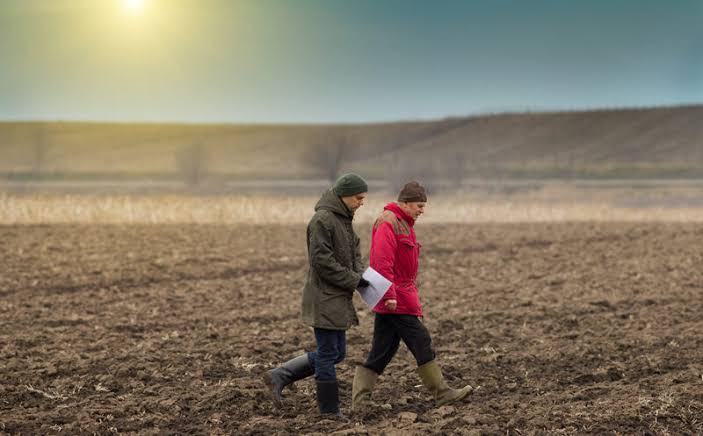
For farmers, the benefits of this technology stack aren’t just about abstract economic instruments. A smallholder farmer could use IoT sensors that are spread across their land to collect information such as soil and weather data. Blockchain locks the information, AI analyses it, and the system transforms it into accurate forecasts.
These types of forecasts could then be shared with cooperatives or banks, or even could be listed directly on Binance as part of a tokenised yield-sharing scheme.
For instance, Binance CMO Rachel Conlan weighed in on the importance Binance has to the whole crypto ecosystem, something farmers could benefit from: “Every move we make at Binance is designed to scale awareness, build trust, and transform curiosity into lasting confidence. That’s how we grow not just our platform, but the entire crypto ecosystem”.
This model gives farmers access to global capital markets and reduces their dependency on local lenders, and this provides farmers with tools to handle risks more effectively. It also empowers investors seeking exposure to agriculture without all of the complexities of owning land and managing farms directly.
The Global Implications
Securing crop forecasts with blockchain, IoT and AI has implications that extend well beyond individual farms. Governments can use such technologies to manage food security, anticipate food shortages and stabilise prices. Commodity traders have access to better information to balance global supply chains. Even consumers benefit indirectly from more accurate forecasts, resulting in less waste and more efficient distribution.
By supporting agricultural data tokenisation, offering liquidity for farm-backed assets, and enabling decentralised exchanges for agricultural tokens, Binance could serve as the bridge between farmers across rural regions and investors in global cities.