
Mimosa Hostilis Root Powder: Botanical Guide and Responsible Sourcing
Furthermore, Mimosa tenuiflora, commonly known as Mimosa hostilis, is a resilient tree native to parts of Latin America, especially northeastern Brazil. The species grows in landscapes shaped by heat, seasonal dryness, and changing soil conditions. Therefore, botanical research begins with the living tree rather than with a packaged material.
Additionally, readers researching mimosa hostilis root powder should understand its botanical origin, appearance, processing considerations, and sourcing responsibilities. This guide focuses on root bark powder as a plant-derived specimen for legal botanical research, collection, and educational reference. It does not provide extraction, ingestion, or preparation instructions.
Moreover, accurate information helps buyers compare product descriptions, ask better questions, and recognize why ethical management matters.
Contents
| Section | What it explains |
| Identification | Key plant characteristics |
| Habitat | Climate and natural distribution |
| Root Bark | Botanical material and quality |
| Cultivation | Basic growing requirements |
| Sustainability | Responsible plant management |
| FAQs | Common research questions |
What Is Mimosa Hostilis Root Powder?
First, Mimosa hostilis is a widely used common name for Mimosa tenuiflora, the botanical name frequently used in modern classification. The species belongs to the Fabaceae family, which includes many trees, shrubs, and herbaceous plants with compound foliage.
In addition, mature trees develop woody stems, branching crowns, and small leaflets arranged along compound leaves. Suitable conditions may produce pale, brush-like flowers that add to the plant’s distinctive appearance. Consequently, researchers should evaluate several features together instead of relying on a common name alone.
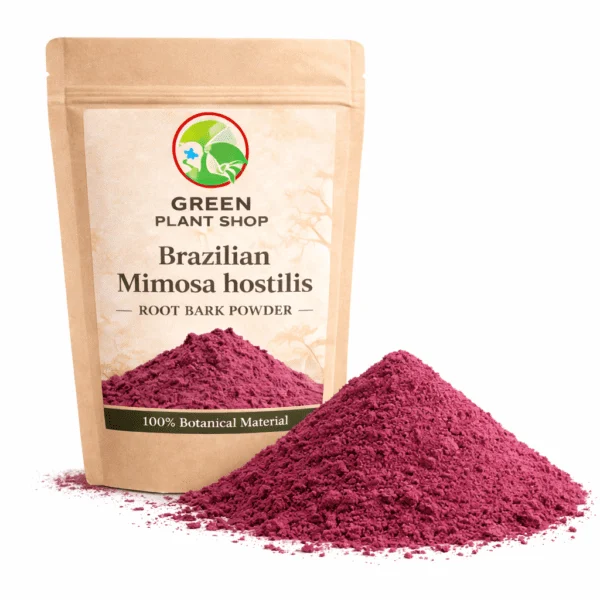
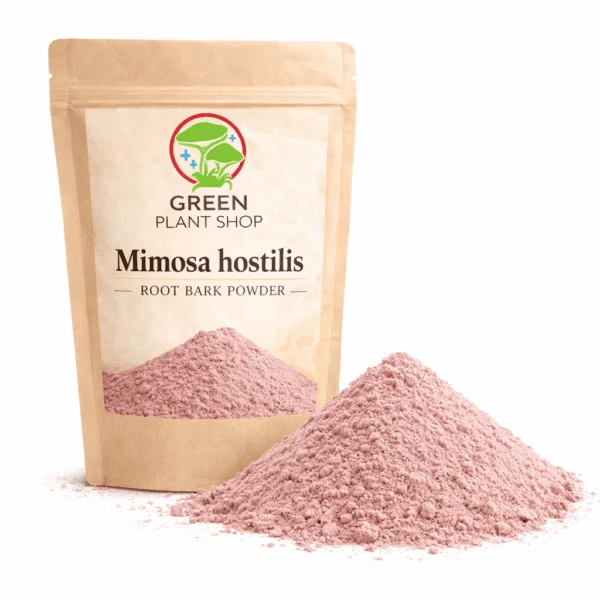
Furthermore, root bark powder refers to a finely milled botanical material derived from the outer bark associated with the tree’s root system. The material may display earthy brown, tan, or reddish-brown tones because color can vary with age, origin, drying conditions, and milling. Therefore, color alone cannot confirm identity or quality.
Meanwhile, responsible product information should identify the botanical name, plant part, country or region of origin when available, approximate grind, packaging details, and handling recommendations.
Where Does Mimosa Tenuiflora Grow Naturally?
Historically, Mimosa tenuiflora has been associated with dry and seasonally harsh environments across parts of Latin America. Northeastern Brazil remains especially important within discussions of the species because local landscapes combine high temperatures, variable rainfall, and periods of drought.
Because of this, the tree possesses traits that help it persist when less-adapted vegetation struggles. The plant can also recover after environmental stress when suitable conditions return.
Additionally, natural distribution does not guarantee identical material from every region. As a result, reputable descriptions should avoid exaggerated claims and should present botanical information clearly.
Ultimately, habitat knowledge gives collectors useful context.
Why the Root Bark Matters
First, roots anchor the tree, access moisture, store resources, and support recovery after stress. The outer bark also protects underlying tissues and participates in the wider structure of the root system. Therefore, removing root bark affects more than a detached piece of plant material.
Moreover, root bark powder offers a convenient format for botanical cataloging because milling creates a consistent, compact material that stores more easily than large pieces.
For this reason, buyers should review whether a product description explains the plant part and presents storage information. A dry, sealed, clearly labeled package supports better long-term organization for legal educational collections. In contrast, vague labeling makes species verification and responsible comparison more difficult.
Furthermore, root bark should never be confused with a recommendation for internal use or chemical processing. Botanical materials can carry legal, health, and environmental considerations that differ by location. Accordingly, researchers should follow applicable laws and use plant products only within lawful, clearly defined purposes.
Soil and Growing Conditions
Generally, Mimosa tenuiflora tolerates challenging soils after establishment, although young plants benefit from consistent attention. Well-drained conditions help reduce prolonged saturation around developing roots. Strong natural light and warm temperatures also support healthy growth when growers cultivate the species legally.
Additionally, young trees may require regular watering while their root systems develop. Established trees can withstand drier conditions, but drought tolerance does not mean that every specimen can survive neglect. Container size, drainage, humidity, temperature, and plant age all influence care requirements.
Meanwhile, growers should protect young plants from frost, standing water, and sudden environmental changes. They should also verify regional rules before cultivating or transporting the species.
Therefore, cultivation knowledge connects directly with root bark sustainability. Healthy nursery stock, careful propagation, and patient growth management provide alternatives to destructive collection from mature wild trees.
Why the Species Supports Restoration
Interestingly, Mimosa tenuiflora can recolonize disturbed areas and contribute to vegetation recovery in suitable environments.
Furthermore, established root systems can help hold soil in place during seasonal weather events. The surrounding vegetation may create habitat for insects, birds, and microorganisms that participate in broader ecosystem processes. Consequently, the species attracts interest beyond commercial botanical collections.
However, restoration value does not justify uncontrolled harvesting. Removing roots or bark from living trees can weaken individual specimens and may reduce their ability to recover. Effective land management therefore balances collection interests with regeneration, habitat protection, and local ecological needs.
Buyers can reinforce better practices by choosing transparent vendors and valuing traceability over unusually low prices.
Botanical Identification and Powder Quality
First, the genus Mimosa includes multiple species with similar compound leaves and overlapping common names. Correct identification therefore requires more than a familiar label. Researchers should consider leaf arrangement, stem texture, flowering traits, growth habit, geographic origin, and documented botanical references together.
Additionally, root bark powder may show natural variation because trees differ in age, growing conditions, and harvest timing.
Moreover, quality-conscious product pages should explain whether the material contains only root bark or includes other plant parts. They should also communicate net weight, packaging, batch details when available, and storage guidance. These details help collectors maintain accurate records and compare products responsibly.
Consequently, buyers should treat strong medicinal, psychoactive, or guaranteed-effect claims with caution.
Sustainability and Responsible Management
Anyhow, increased commercial attention can place pressure on plants that grow slowly or regenerate unevenly. Root and bark harvesting deserves special care because excessive removal can permanently damage living trees. Responsible management should therefore prioritize regeneration and population health.
Suppliers can also reduce unnecessary waste through measured packaging, clear labeling, and practical storage guidance.
They can keep botanical materials sealed, dry, and clearly documented without making unsupported claims about identity or performance.
Importantly, purchasing larger quantities does not remove the need for responsible handling. For collectors seeking a bulk format, the mimosa hostilis root bark powder 1kg option can provide a clearly labeled quantity for lawful botanical inventory, subject to local rules and availability. Buyers should confirm product specifications before ordering and should never assume that a larger package changes legal requirements.
Ultimately, sustainable demand rewards transparency.
Frequently Asked Questions
Is Mimosa Hostilis Mimosa Tenuiflora?
Yes, the names commonly refer to the same species, although Mimosa tenuiflora is frequently used as the accepted botanical name. Buyers should review the scientific name and product details before comparing materials.
What Does Root Bark Powder Contain?
Generally, root bark powder consists of milled bark from the tree’s root system, although exact composition depends on sourcing and processing. Buyers should use the label and supplier documentation to confirm plant parts.
Does Powder Color Always Prove Quality?
No, color can vary naturally with origin, age, drying, and milling.
Can Growers Cultivate The Species?
Yes, legal cultivation may be possible in suitable warm environments with light, drainage, and careful establishment. However, growers must check local regulations before obtaining, planting, transporting, or propagating the species.
Why Does Responsible Sourcing Matter?
Because, excessive root or bark collection can weaken living trees and reduce wild populations. Responsible sourcing supports regeneration, conservation, and more reliable access to botanical materials over time.
Final Thoughts
In conclusion, Mimosa tenuiflora represents more than a source of root bark powder.
Botanical identification, honest labeling, appropriate storage, and lawful handling all improve the quality of educational collections.
Finally, responsible purchasing should support transparent suppliers and sustainable management.
Additionally, careful documentation helps collectors understand what they purchase, where the material originated, and how responsible handling supports botanical research. Therefore, transparent descriptions remain valuable for comparisons. Meanwhile, lawful storage protects product integrity. Finally, respectful sourcing keeps conservation, education, and accurate plant identification at the center of every collection.
Ultimately, responsible botanical research matters.